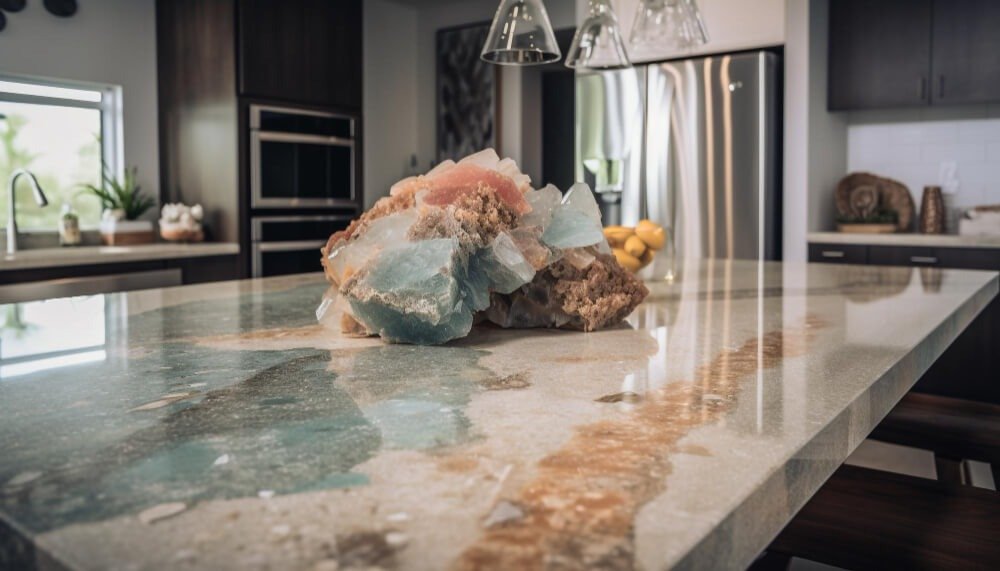
Engineered Excellence: The Science Behind Quartz Worktops
The allure of quartz worktops is undeniable, but their true genius lies beneath the surface, born from a sophisticated fusion of geology and human ingenuity. To call quartz “man-made” is accurate but insufficient; it is more precisely engineered stone, a material meticulously designed to outperform its natural counterparts. This article pulls back the curtain on the fascinating science and manufacturing process that transforms raw minerals into the resilient, hygienic, and beautiful surfaces that have revolutionized modern kitchens and bathrooms.
The Foundation: Natural Quartz Crystals
The journey begins with the raw material: quartz crystals, one of the hardest and most abundant minerals on Earth, second only to diamonds on the Mohs scale of hardness. This inherent toughness forms the foundation of quartz worktop durability.
Mined quartz is crushed and ground into aggregates of varying sizes, ranging from fine dust to small pebbles. The precise balance of these particles is carefully controlled by manufacturers, as it directly influences the final appearance—whether the slab has a smooth, marble-like finish or a more textured, granular look. Quartz aggregates typically account for about 90–93% of the final product by weight, giving engineered quartz its impressive strength and longevity.
The Binding Innovation: Polymer Resins and Pigments
What truly sets engineered quartz apart from natural stone is its binding agent. Instead of relying on natural geological pressure over thousands of years, quartz slabs are held together using high-quality polymer resins, usually acrylic or polyester-based.
These resins, making up approximately 7–10% of the composition, act as a permanent bonding agent that fills microscopic gaps between quartz particles. This process creates a completely non-porous surface, a defining feature of quartz worktops. Unlike granite or marble, quartz does not require sealing and is naturally resistant to stains and moisture.
The resin also allows for the addition of UV-stable pigments, enabling an almost limitless range of colors and patterns—from minimalist solid tones to complex veining that mimics natural stone.
Precision Manufacturing: From Mix to Slab
The production of quartz worktops is a highly controlled, technologically advanced process. Once the quartz aggregates, resins, and pigments are mixed, the material is poured into molds and subjected to vibro-compaction. This vibration removes air pockets and ensures uniform distribution.
The slabs are then compressed under intense vacuum pressure, creating an extremely dense structure. Following this, the slabs are cured in specialized ovens where controlled heat triggers polymerization, permanently hardening the resin and locking the structure into place.
After cooling, slabs are trimmed to size and undergo rigorous quality control checks, often using electronic scanning to detect imperfections.
Finishing Touches: Polishing and Surface Design
The final stage is where quartz worktops gain their signature appearance. Slabs are polished using diamond-tipped heads in multiple stages, progressing from coarse grinding to ultra-fine polishing. This produces a consistent, long-lasting shine that is easier to maintain than natural stone.
For honed or matte finishes, polishing is stopped earlier in the process. Some advanced manufacturers also use digital printing and pressing technologies to create realistic veining that runs through the depth of the slab, ensuring visual consistency even after years of use or refinishing.
Why Engineered Quartz Outperforms Natural Stone
Understanding the science behind quartz worktops explains their superior performance:
- Stain resistance comes from a non-porous surface that prevents liquid absorption
- Durability results from hard quartz crystals supported by a flexible resin matrix
- Hygiene is enhanced because bacteria and mold have no pores to inhabit
- Consistency ensures uniform color and pattern across slabs
By engineering out the weaknesses of natural stone and amplifying its strengths, quartz offers a surface perfectly suited to modern living.
A Material Designed for the Modern Home
A quartz worktop is more than just a design choice—it is a product of advanced material science. Carefully engineered for performance, durability, and beauty, quartz represents a smarter evolution of stone surfaces, purpose-built for contemporary kitchens and bathrooms.
Disclaimer
This article is for informational purposes only and does not constitute professional design, construction, or material advice. Product composition, performance, and manufacturing methods may vary by brand and supplier. Readers should consult qualified professionals and verify specifications directly with manufacturers or fabricators before making purchasing or installation decisions.