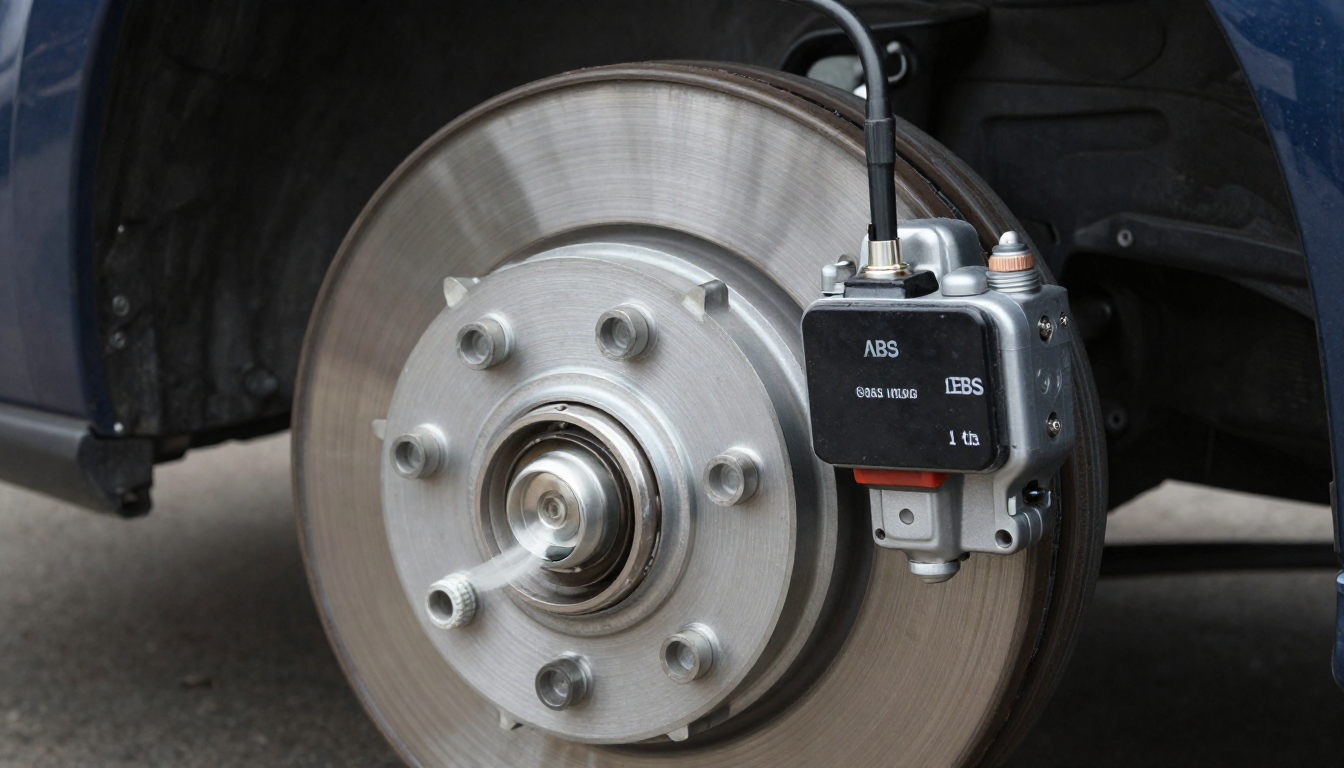
ABS Testauslösung: Guide to ABS Activation, Testing, and Vehicle Safety
ABS Testauslösung is a crucial concept in modern vehicle safety because braking systems are the most critical safety components in any automobile. Unlike comfort or entertainment features, brakes are directly responsible for preventing accidents and saving lives. Even the most powerful engine or the most advanced navigation system becomes meaningless if a vehicle cannot stop safely.
ABS technology was introduced to solve one major braking problem: wheel lock-up during emergency braking. When wheels lock, the vehicle can skid uncontrollably, reducing steering ability and significantly increasing accident risk.
This is why Testauslösung plays such an important role. It refers to the controlled activation or triggering of the Anti-lock Braking System to verify that it engages correctly under critical conditions, ensuring the system performs reliably when it is needed most.
What Does ABS Testauslösung Mean?
The term ABS can be translated as:
- ABS test triggering
- ABS activation test
- Controlled ABS engagement
In simple words, ABS Testauslösung refers to the moment when ABS is deliberately or automatically activated to confirm that the system responds correctly.
ABS activation occurs when the vehicle detects that one or more wheels are about to lock up during braking. The system then rapidly modulates brake pressure to prevent lock-up.
ABS Testauslösung is important in:
- Vehicle diagnostics
- Workshop troubleshooting
- Safety inspections
- Brake system evaluations
- Driver training environments
The goal is always the same: ensuring ABS engages properly at the right time.
Understanding the Anti-lock Braking System (ABS)
Role of ABS in Vehicle Safety
The Anti-lock Braking System is designed to prevent wheels from locking during hard braking. Instead of allowing tires to skid across the road surface, ABS keeps them rotating, which improves control.
ABS helps by:
- Maintaining steering control during emergency braking
- Reducing the risk of skidding
- Improving stability on slippery roads
- Enhancing overall braking safety
While ABS may not always shorten stopping distance on dry pavement, it greatly improves control, which is often more important than distance alone.
Key Components of the ABS System
To understand ABS Testauslösung, it is essential to know how ABS works internally.
Wheel Speed Sensors
Each wheel is equipped with a sensor that measures its rotational speed. These sensors send data to the ABS control unit.
ABS Control Unit (ECU)
The Electronic Control Unit constantly processes wheel speed signals. If it detects wheel lock tendency, it activates ABS.
Hydraulic Modulator
This component controls brake pressure. It rapidly reduces and reapplies pressure many times per second.
Brake Lines, Valves, and Pump
These parts distribute controlled hydraulic pressure to each wheel individually.
Together, these components ensure braking remains effective without losing traction.
How ABS Activation Works (ABS Testauslösung Mechanism)
ABS activation is automatic. The driver does not manually control it.
The process works like this:
- The driver applies strong brake pressure
- Wheel speed sensors detect sudden deceleration
- ECU identifies that a wheel is about to lock
- ABS modulator reduces pressure to that wheel
- Pressure is reapplied immediately
- The cycle repeats rapidly until traction is restored
This modulation happens up to 15 times per second, producing the familiar pedal pulsation drivers feel.
ABS Testauslösung focuses on verifying this mechanism under correct conditions.
ABS Sensor Technology and Its Role in Testauslösung
Wheel speed sensors are the foundation of ABS activation. Without accurate sensor input, ABS cannot function correctly.
Passive ABS Sensors
Passive sensors are an older technology. They use an inductive coil and operate with a toothed ABS ring.
- Produce a sine wave signal
- Signal depends on wheel speed
- Usually found in older vehicles
Key characteristics:
- Available in 2-wire and 3-wire versions
- The third wire provides shielding against noise
Passive sensors can sometimes be tested with resistance measurement, but that is incomplete.
Important values include:
- Resistance (Ω)
- Induction (mH)
- Voltage peak-to-peak (VPP)
Active ABS Testauslösung Sensors (Hall Effect Sensors)
Modern vehicles use active sensors based on Hall effect chips.
Active sensors:
- Produce a square wave signal
- Provide stable output at all speeds
- Works well with ESP, TPMS, and ADAS systems
Two variants exist:
- Active sensor with magnetic ABS ring
- Inductive Hall sensor with toothed ring
Unlike passive sensors, Hall sensors cannot be diagnosed with a multimeter. Only an oscilloscope or scan tool provides accurate testing.
Why Sensor Accuracy Matters
A faulty sensor can cause:
- Incorrect wheel speed readings
- Delayed ABS activation
- ABS failure during emergencies
- Warning lights and fault codes
Therefore, proper ABS Testauslösung depends heavily on sensor performance.
ABS Testauslösung in Real Driving Conditions
In everyday driving, ABS activation occurs mainly during sudden braking situations.
Common scenarios include:
Emergency Braking
A driver stops suddenly to avoid a collision. ABS engages immediately to prevent wheel lock.
Wet Roads
Reduced traction causes wheels to lock more easily, so ABS activates frequently.
Snow and Ice
ABS helps maintain steering control, though stopping distance may increase.
Gravel or Sand
ABS feels aggressive, but it prevents uncontrolled skidding.
Drivers often experience:
- Pulsating brake pedal
- Mechanical clicking noises
- Vibrations during braking
These sensations indicate ABS Testauslösung is occurring.
Professional ABS Testauslösung in Diagnostics and Workshops
Why Controlled Testing Is Necessary
Many ABS faults do not appear in daily driving. Controlled activation tests allow technicians to detect issues safely.
Workshops avoid dangerous road tests by using diagnostic tools.
Diagnostic Equipment Used
OBD-II ABS Scanners
These tools read fault codes and live sensor data.
Oscilloscopes
Essential for waveform analysis:
- Passive sensors show sine waves
- Active sensors show square waves
Specialized Multimeters
Some advanced meters measure induction in millihenry (mH), useful for passive sensors.
Key Parameters Checked
Technicians evaluate:
- Voltage level (signal strength)
- Duty cycle (rotation accuracy)
- Frequency response
- Pulse width stability
Comparing results with an original sensor ensures accuracy.
ABS Testauslösung During Vehicle Inspection and Regulations
In many countries, ABS functionality is mandatory for road approval.
Inspection procedures include:
- Checking ABS warning lamp
- Verifying ECU self-tests
- Performing controlled braking tests
- Reviewing stored fault codes
If ABS Testauslösung fails or behaves incorrectly, the vehicle may fail inspection.
Common Problems Affecting ABS Testauslösung
| Problem Category | Specific Issues |
| Sensor and Wiring Issues | Dirty sensor heads |
| Broken wiring harnesses | |
| Loose connectors | |
| ABS Ring Defects | Missing teeth |
| Corrosion | |
| Cracked magnetic rings | |
| Hydraulic Modulator Failures | Valve sticking |
| Pump malfunction | |
| Air in brake lines | |
| ECU and Software Malfunctions | Communication errors |
| Power supply issues | |
| Internal ECU failure |
Warning Signs of Incorrect ABS Testauslösung
Drivers and technicians should watch for:
- ABS warning light is staying on
- Wheels locking during hard braking
- No pedal vibration when expected
- Uneven braking behavior
- Diagnostic trouble codes stored in the ECU
Any of these signs requires immediate attention.
ABS Testauslösung vs Normal Braking Behavior
Understanding the difference helps drivers respond correctly.
Normal Braking:
- Smooth pedal feel
- Wheels may lock under extreme pressure
- Steering control is reduced during a skid
ABS Activation:
- Pulsating pedal
- Wheels continue rotating
- Steering control maintained
- Vehicle stability improved
Drivers should never release the brake when ABS engages. Maintaining steady pressure allows the system to work properly.
ABS Testauslösung in Modern Safety Systems
ABS no longer works alone. Modern vehicles integrate ABS with:
- Electronic Stability Control (ESC)
- Traction Control Systems (TCS)
- Advanced Driver Assistance Systems (ADAS)
ABS Testauslösung becomes even more important because these systems depend on accurate braking and wheel speed data.
ABS Testauslösung in Electric and Hybrid Vehicles
Electric and hybrid vehicles combine ABS with regenerative braking.
Key points:
- ABS overrides regeneration during emergency braking
- Coordination between systems is software-controlled
- Diagnostics are more complex
ABS Testauslösung remains critical even in advanced drivetrains.
Driver Training and Awareness of ABS Activation
Driving schools often teach drivers how ABS feels and how to respond.
Training includes:
- Simulated emergency braking
- Learning pedal feedback
- Trusting ABS engagement
- Avoiding the panic release of brakes
Educated drivers react better during real Testauslösung events.
Maintenance Tips to Ensure Reliable ABS Testauslösung
To keep ABS working correctly:
- Replace brake fluid regularly
- Keep wheel sensors clean
- Fix warning lights immediately
- Inspect ABS rings during brake servicing
- Use quality brake parts
Preventive care ensures ABS activates correctly when needed.
Myths and Misunderstandings About ABS Testauslösung
| Myth | Reality |
| Myth 1: ABS Always Shortens Braking Distance | ABS mainly improves steering control and stability, not always stopping distance. |
| Myth 2: ABS Means You Can Brake Later | Safe following distance is still necessary, even with ABS. |
| Myth 3: ABS Requires No Maintenance | ABS sensors, wiring, and hydraulic parts can wear out and need regular servicing. |
| Myth 4: Multimeters Are Enough for Sensor Testing | Active ABS sensors require oscilloscope-based diagnostics, not simple resistance checks. |
Future of ABS Testauslösung and Brake Technology
Future braking systems will include:
- AI-supported predictive braking
- Vehicle-to-road communication
- Fully electronic brake-by-wire systems
Despite advancements, ABS Testauslösung will remain foundational because ABS is still the core emergency braking safety mechanism worldwide.
Conclusion
ABS Testauslösung is far more than a technical term—it represents one of the most critical safety verification processes in modern vehicles.
From real-world emergency braking to professional diagnostic testing, ABS activation ensures:
- Wheels do not lock
- Steering control remains available
- Skidding risk is minimized
- Safety systems function properly
Understanding ABS Testauslösung empowers drivers, mechanics, and inspectors alike. As vehicles evolve toward greater automation and electrification, ABS will remain a fundamental braking technology—and ensuring its correct activation will always be essential for road safety.
By maintaining ABS components, recognizing warning signs, and using proper diagnostic methods, we can trust vehicles to respond safely when it matters most.