Natural Stone Flooring: Why Travertine Beats Marble & Granite
Have you ever walked into a room and felt instantly transported to a luxurious villa in Italy? That’s the magic of travertine floor tiles. These natural stone tiles have been used for centuries in buildings around the world, from ancient Roman structures to modern homes. They’re not just pretty; they’re tough and versatile too.
If you’re thinking about updating your floors, travertine could be a great choice. In this article, we’ll dive into what makes these tiles special, their ups and downs, how to install them, and more.
What Exactly is Travertine?
Travertine is a type of natural stone that comes from the earth. It’s a form of limestone, created when minerals dissolve in hot spring water and then get deposited as the water cools. This process happens over thousands of years, giving travertine its unique look with small holes and veins running through it. These holes are from gas bubbles that got trapped during formation.
Most travertine comes from places like Turkey, Italy, and Mexico, where there are lots of natural hot springs. The stone is quarried, cut into tiles, and then finished in different ways to suit various styles. What sets travertine apart from other stones is its porous nature, which can be both a feature and something to manage. It’s earthy and warm, often in neutral tones that blend well with many home designs.
Imagine flooring that looks like it was pulled straight from nature – that’s travertine. It’s not man-made like ceramic tiles; each piece is one-of-a-kind with natural patterns that add character to any space.
Advantages of Choosing Travertine Floor Tiles
Why pick travertine over other flooring options? Let’s break it down with some key benefits:
- Timeless Beauty: Travertine has a classic, elegant look that never goes out of style. Its natural variations in color and texture make every floor unique, adding a touch of luxury to your home.
- Durability: This stone is tough. It can handle heavy foot traffic, making it ideal for busy areas like living rooms or hallways. With proper care, it lasts for decades.
- Versatility: You can use travertine indoors or outdoors. It’s great for floors, but also works on walls, countertops, and even around pools because it’s naturally slip-resistant when textured.
- Eco-Friendly: As a natural material, it’s sustainable and doesn’t involve harsh chemicals in production. Plus, it can help regulate temperature in your home, keeping things cooler in summer.
- Increases Home Value: Installing travertine can boost your property’s appeal and worth, as buyers love high-end natural stone features.
- Heat Resistance: Perfect for areas with underfloor heating, as it conducts heat well without cracking.
These perks make travertine a smart investment for anyone wanting a blend of style and practicality.
Potential Drawbacks to Consider
No material is perfect, and travertine has its challenges. Here’s what you should know:
- Porosity: Those natural holes can absorb liquids, leading to stains if not sealed properly. You’ll need to seal it regularly.
- Cost: Travertine is pricier than vinyl or laminate, often ranging from $5 to $15 per square foot, not including installation.
- Maintenance Needs: It requires more upkeep than porcelain tiles. Avoid acidic cleaners, as they can etch the surface.
- Slipperiness: Polished versions can be slick when wet, so they’re not the best for bathrooms without added texture.
- Weight: Being heavy stone, it might need extra support in some structures, and installation isn’t easy for beginners.
- Cold Underfoot: Without heating, it can feel chilly in winter, though rugs can help.
Weighing these cons against the pros will help you decide if travertine fits your lifestyle.
Different Types and Finishes of Travertine Tiles
Travertine comes in several finishes, each giving a different vibe. Here’s a rundown:
- Honed: This has a smooth, matte surface that’s not shiny. It’s great for a modern, understated look and is less slippery.
- Polished: Shiny and reflective, like marble. It shows off the stone’s colors but can be slick and shows scratches more.
- Tumbled: Aged and rustic, with rounded edges. Perfect for outdoor patios or a vintage feel indoors.
- Brushed: Textured for extra grip, often used in wet areas.
- Filled vs. Unfilled: Filled tiles have the holes plugged with resin for a smoother surface; unfilled keep the natural pits for authenticity.
Choosing the right finish depends on where you’ll use it and your style preference.
Take a look at this example of honed travertine in a cozy living room setting.
Popular Colors and Sizes
Travertine naturally comes in earthy shades that evoke the outdoors. Common colors include:
- Beige and ivory for a light, airy feel.
- Walnut and brown for warmer, richer tones.
- Red and gold for bolder accents.
- Silver or gray for a contemporary twist.
Sizes vary to fit different projects. Standard tiles are 12×12 inches or 18×18 inches, but you can find larger slabs or smaller mosaics. French pattern sets mix sizes like 8×8, 8×16, and 16×16 for a dynamic layout. Pavers are thicker for outdoor use, often 1-2 inches thick.
Mixing colors and sizes can create stunning patterns, like herringbone or random layouts.
Where to Use Travertine Tiles
Travertine’s versatility shines in many spots:
- Kitchens: Durable for spills, but seal well to prevent stains.
- Bathrooms: Moisture-resistant and spa-like; use tumbled for safety.
- Living Areas: Adds elegance to entryways or family rooms.
- Outdoors: Ideal for patios, pool decks, and driveways due to its weather resistance.
- Walls and Backsplashes: Not just floors – it makes beautiful accents.
Avoid using it in areas with heavy chemical exposure, like garages.
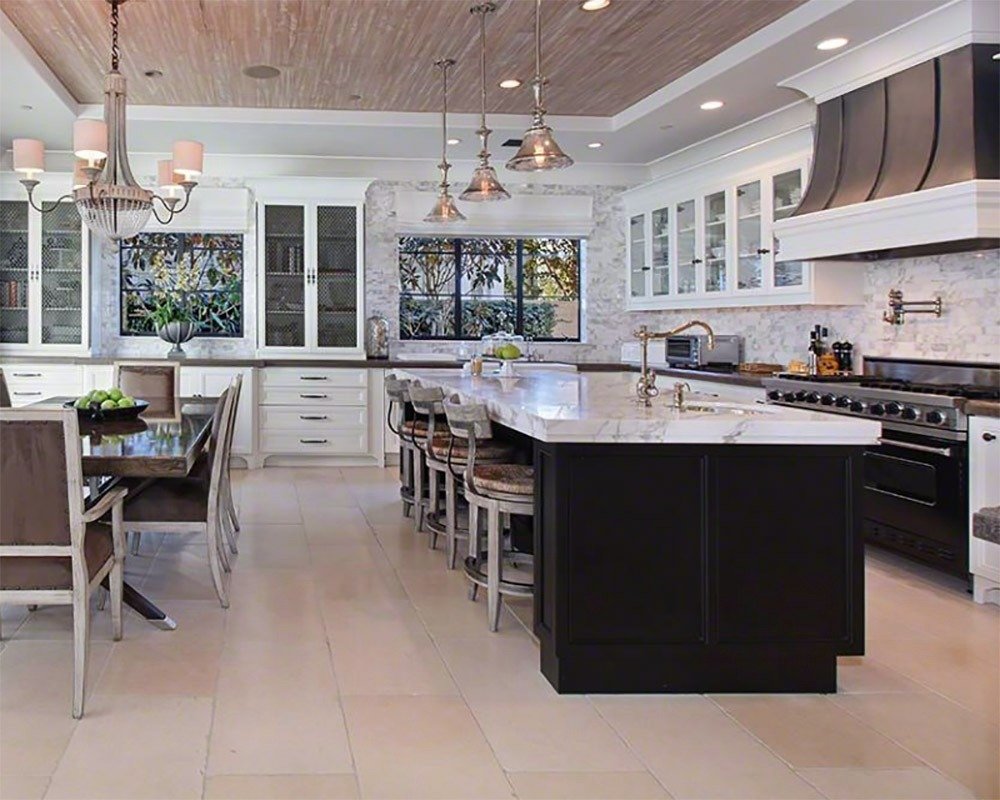
Here’s an inspiring kitchen floor with travertine tiles.

Step-by-Step Installation Guide
Installing travertine isn’t for everyone – it’s best left to pros if you’re not handy. But if you’re up for it, here’s a simple guide:
- Prepare the Surface: Make sure your subfloor is clean, level, and dry. Use a self-leveling compound if needed.
- Plan the Layout: Dry-lay the tiles to see the pattern. Start from the center for symmetry.
- Apply Adhesive: Use thinset mortar suitable for stone. Spread it with a notched trowel.
- Place the Tiles: Press them into the mortar, using spacers for even grout lines. Cut tiles as needed with a wet saw.
- Grout the Joints: After 24 hours, apply grout. For unfilled travertine, use sanded grout to fill holes too.
- Seal the Tiles: Wait a few days, then apply a penetrating sealer. Do two coats for best protection.
Always wear safety gear and follow manufacturer instructions. If in doubt, hire a professional to avoid costly mistakes.
Maintenance Tips for Long-Lasting Beauty
Keeping travertine looking great is straightforward with these habits:
- Daily Cleaning: Sweep or vacuum regularly to remove dirt. Mop with warm water and a pH-neutral cleaner – no vinegar or lemon!
- Sealing Schedule: Reseal every 1-3 years, depending on traffic. Test by dripping water; if it beads, it’s good.
- Spill Response: Wipe up spills right away to prevent staining.
- Avoid Abrasives: Don’t use scrub brushes or harsh chemicals that can scratch or etch.
- Protect from Furniture: Use felt pads under legs to prevent scratches.
- Professional Help: For deep cleans or repairs, call in experts.
With consistent care, your travertine floors will stay beautiful for years.
Conclusion
Travertine floor tiles offer a perfect mix of natural charm, strength, and flexibility that can elevate any space. Whether you’re revamping your home or building a new patio, they bring a sense of timeless sophistication. Sure, they need some TLC, but the rewards are worth it – a floor that’s as unique as you are.